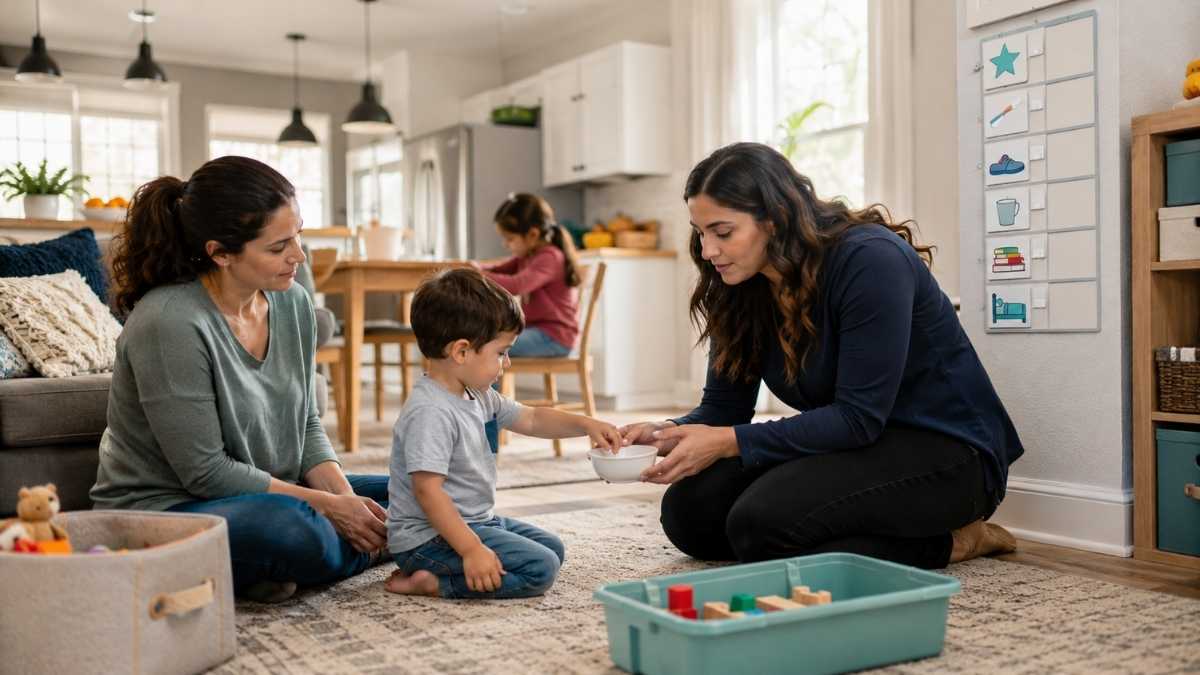
Understanding the Challenge of Nonverbal Communication in Autism
Children with autism spectrum disorder (ASD) often face significant challenges in recognizing and interpreting nonverbal cues—such as body language, facial expressions, and gestures—that are critical for effective social interaction. This difficulty can hinder their ability to communicate and build relationships, impacting their daily lives. With advancements in therapeutic approaches, notably Applied Behavior Analysis (ABA), there are evidence-based strategies designed to support these children in decoding and using nonverbal communication successfully.
What Is Applied Behavior Analysis (ABA) and Its Role in Autism Support?
What is applied behavior analysis (ABA) therapy, and how is it used to support individuals with autism?
Applied Behavior Analysis (ABA) therapy is a scientifically supported approach focusing on learning and behavior to assist individuals with autism spectrum disorder (ASD). It aims to help children and adults develop crucial social, communication, and everyday living skills by analyzing behavior and applying systematic interventions.
ABA uses techniques like positive reinforcement, where desired behaviors are rewarded to encourage repetition, and prompting, which offers cues to guide individuals toward appropriate responses. This method also involves breaking complex skills into smaller, manageable steps, allowing learners to build abilities gradually and confidently.
Central to ABA is the creation of individualized treatment plans tailored to each person's strengths and challenges. These plans rely on ongoing data collection and assessment to ensure interventions remain effective and responsive to progress.
Qualified professionals such as Board Certified Behavior Analysts (BCBAs) typically design and oversee ABA programs. Trained therapists, including Registered Behavior Technicians (RBTs), deliver the daily interventions, ensuring consistency and adaptability whether in clinical settings or at home.
Scientific studies have demonstrated that intensive ABA therapy—often ranging from 20 to 40 hours per week—can significantly improve language skills, social interactions, and overall independence in children with autism. Its evidence-based foundation makes ABA one of the most recommended treatments for ASD to support meaningful developmental gains.
Professionals Behind ABA: Training and Expertise Required
Who provides ABA therapy, and what qualifications do professionals need to deliver it effectively?
ABA therapy is mainly provided by qualified professionals such as Board Certified Behavior Analysts (BCBAs) and trained therapists. These individuals undergo extensive education and training in behavior analysis to ensure they deliver effective interventions.
Typically, ABA providers hold a master's degree in psychology, special education, or a related field. They also complete around 1,500 to 2,000 hours of supervised fieldwork to gain practical experience before certification.
Certification is a critical requirement, with the Behavior Analyst Certification Board (BACB) offering credentials such as the BCBA certification. Passing the BCBA exam and obtaining licensure, where applicable, ensures professionals meet high standards of competency.
Essential skills for these providers include active listening, accurate assessment, systematic data collection, and the ability to design and implement personalized intervention plans using proven ABA strategies like positive reinforcement.
ABA professionals often practice in various settings such as schools, clinics, and home environments. They work closely with families and other team members to create supportive, collaborative approaches tailored to each child's needs.
How ABA Stands Apart: Comparing Therapeutic Approaches for Autism
How does ABA therapy differ from other therapeutic approaches for autism?
Applied Behavior Analysis (ABA) therapy is distinct in its emphasis on observable behaviors and its structured, data-driven approach. It systematically uses techniques like positive reinforcement to modify both desirable and challenging behaviors. This method contrasts with therapies such as speech and occupational therapy, which primarily focus on improving specific skills like communication and sensory integration.
While speech therapy targets verbal communication and occupational therapy addresses sensory sensitivities and motor skills, ABA covers a broad spectrum of functional behaviors, including social skills and nonverbal communication. ABA interventions are usually highly individualized, with detailed goal-setting based on continuous data collection and analysis, ensuring that each program suits the child's unique needs.
Developmental approaches like DIR/Floortime rely on emotional connection and child-led interactions, encouraging spontaneous communication and relational growth. In contrast, ABA employs structured teaching strategies, often incorporating play and naturalistic settings to promote learning. These systematic and measurable techniques help ABA maintain a clear framework for tracking progress and adjusting interventions.
In summary, ABA stands apart by combining a behavioral focus, rigorous data use, individualization, and broad skill development. It complements other therapies by offering a measurable and evidence-based way to enhance social communication and reduce challenging behaviors in children with autism.
Teaching Nonverbal Communication Through ABA Techniques
How do visual supports like picture cards and social stories help in teaching nonverbal communication?
Visual supports such as picture cards and social stories are integral tools in ABA therapy. They provide concrete and clear visual cues that help children with autism understand and use nonverbal communication more effectively. These supports make abstract concepts like facial expressions or gestures more accessible by breaking them down into understandable visuals.
What role do prompting and reinforcement play in developing nonverbal behaviors?
Prompting involves giving cues or hints to encourage the child to perform specific nonverbal actions, like making eye contact or using gestures. Reinforcement follows when the desired behavior is correctly performed, providing positive feedback to strengthen that behavior. This cycle helps children learn to consistently use nonverbal communication.
How are role-playing and structured social skills training used?
Role-playing and structured scenarios help children practice nonverbal cues in real-life social contexts. These methods make learning interactive and fun, allowing children to experience and interpret body language, facial expressions, and other cues in a safe environment.
What is video modeling and how does it aid learning?
Video modeling shows children videos demonstrating correct nonverbal communication behaviors. Watching these models helps children imitate and internalize nonverbal cues by seeing them performed by others, enhancing their learning through observation.
How are ABA interventions customized to a child’s unique needs?
ABA programs are highly individualized. Therapists tailor interventions to match each child's strengths, challenges, and learning style, ensuring that the development of nonverbal communication skills is effective and relevant to their daily life.
What evidence suggests ABA methods improve nonverbal communication skills?
Research indicates that ABA strategies lead to significant improvements in children's ability with autism to interpret and use nonverbal cues, resulting in better social interactions. This highlights the effectiveness of ABA in supporting communication development.
| Technique | Description | Benefit for Nonverbal Communication |
|---|---|---|
| Visual Supports | Picture cards, social stories | Clarify abstract nonverbal concepts |
| Prompting and Reinforcement | Cues followed by positive feedback | Encourages consistent nonverbal behavior |
| Role-Playing & Social Skills | Practice in structured social scenarios | Enhances real-life social cue understanding |
| Video Modeling | Observation of modeled behaviors | Facilitates imitation and learning |
| Customization | Tailored therapy plans | Meets individual learning needs |
Breaking Down Nonverbal Cues: Understanding Body Language
What Are the Components of Body Language?
Body language encompasses a wide range of nonverbal signals that communicate feelings and intentions without words. It includes facial expressions, gestures, posture, tone of voice, eye contact, touch, spatial use, and vocal qualities. These components work together to convey emotions and attitudes.
How Do Facial Expressions, Gestures, and Posture Play a Role?
Facial expressions express emotions instantly, such as happiness, sadness, or surprise. Gestures, like hand movements or nodding, help emphasize messages or express agreement. Posture reveals confidence, openness, or discomfort, influencing how others perceive and respond to a person.
Why Are Tone of Voice, Eye Contact, Touch, and Spatial Use Important?
Tone of voice adds emotional context to words, such as warmth or urgency. Eye contact establishes connection and shows attentiveness or trustworthiness. Touch can comfort or signal boundaries. The use of space—how close or distant one stands—affects the sense of intimacy or formality.
How Does Effective Body Language Build Trust and Clarity?
When body language matches spoken words, it builds trust and clarifies messages, fostering stronger relationships. Consistent nonverbal cues reduce confusion, making communication more effective and sincere.
What Happens When Nonverbal Signals Mismatch?
Mismatched signals can lead to misunderstandings, creating confusion and mistrust. For example, saying "yes" verbally but shaking the head negatively can leave others unsure of true intentions.
Why Is Understanding Body Language Relevant for Children with Autism?
Children with autism often find it challenging to recognize and interpret these subtle cues. Improving their ability to understand nonverbal communication enhances social interactions and relationships. Applied behavior analysis (ABA) techniques specifically target these skills, using methods such as visual supports and social skills training to strengthen nonverbal communication abilities. Developing these skills can significantly improve a child's ability to connect with others and navigate social situations more comfortably.
Goals and Expected Outcomes of ABA in Enhancing Nonverbal Skills

What are the typical goals and outcomes expected from ABA therapy in autism treatment?
Applied Behavior Analysis (ABA) therapy focuses on enhancing communication and social interactions in children with autism, especially improving nonverbal skills such as understanding and using body language and gestures. One primary goal is to increase independence by teaching functional skills that can be used in everyday life.
ABA also aims to reduce problematic behaviors that may hinder social engagement or learning. These behaviors might include difficulties with social-emotional reciprocity or challenges in interpreting nonverbal cues common in autism spectrum disorder (ASD).
Goals in ABA therapy are individualized and measurable. Therapists set both short-term objectives, like recognizing specific nonverbal cues, and long-term aims, such as fostering meaningful communication and conversational abilities. Therapists work closely with families to establish these targets and to monitor progress regularly.
Collaboration between therapists, parents, and caregivers is vital for ensuring that interventions are effective and tailored to each child's unique abilities and needs. This teamwork also supports the generalization of learned skills across different settings.
Ultimately, ABA strives for overall improvement in adaptive functioning, helping children with autism participate more fully in social activities and daily routines. By focusing on meaningful, socially relevant behaviors, ABA can significantly enrich the quality of life for children and their families.
Engaging Families in ABA: Strengthening Home and Therapy Connections
How can families engage with ABA therapy and support their loved ones undergoing treatment?
Family engagement in ABA therapy plays a crucial role in a child's progress. Parents and caregivers are encouraged to collaborate closely with therapists by attending parent training sessions. These sessions teach families how to apply ABA techniques effectively at home, ensuring consistency beyond clinical settings.
Consistent reinforcement of positive behaviors at home supports the child's development and helps the child generalize skills learned during therapy. This uniform approach across environments strengthens learning and social growth.
Involving siblings and other caregivers fosters a supportive home environment. When siblings understand the therapy goals and nonverbal cues being taught, it enhances family bonding and creates a more inclusive atmosphere for the child.
Open communication between families and therapists is vital. It allows parents to share observations, tailor strategies to meet the child's individual needs, and address any challenges promptly. Such ongoing dialogue contributes to more effective and personalized intervention plans.
Research consistently shows that active family involvement leads to better treatment outcomes, including improved behavior, stronger social skills, and deeper family relationships. Encouraging families to participate fully in ABA programs maximizes the benefits of therapy for children with autism.
Complementary Therapies and Strategies Supporting Nonverbal Communication
What is Relationship Development Intervention (RDI) and its focus?
Relationship Development Intervention (RDI) is a therapy designed to enhance social behaviors and improve the interpretation of body language and eye contact. This approach involves both therapists and family members, setting specific goals that support the child's ability to better understand social cues and engage in meaningful interactions.
How does sensory integration therapy help children with autism?
Sensory integration therapy addresses hypersensitivity to sensory stimuli common in children with autism. It employs gradual exposure techniques to help children become more comfortable with sensory experiences, avoiding forceful methods. This therapy aids children in managing sensory challenges that might interfere with their ability to engage in nonverbal communication.
What communication aids are used to support nonverbal children?
Various communication aids supplement traditional therapies to enhance communication skills in nonverbal children. These include:
- Picture Exchange Communication System (PECS), which uses picture cards to facilitate expression.
- Speech-Generating Devices (SGDs), electronic tools that produce spoken language.
- Communication boards and sign language, which serve as alternative communication pathways.
These tools help children express themselves and understand others, bridging gaps in verbal communication.
Why are emotional awareness and stress management important?
Improving emotional awareness and effective stress management enables individuals to better interpret and use nonverbal communication. Reduced stress levels and heightened emotional understanding foster clearer expressions and reception of nonverbal cues, thereby enhancing social interactions.
What role does observing group nonverbal cues and trusting instincts play?
Accurately interpreting body language involves keen observation of group nonverbal signals and trusting personal instincts. This skill helps in understanding social dynamics and responding appropriately, which is particularly beneficial for individuals learning to decode complex social cues.
Toward Enhanced Communication and Social Participation
Helping children with autism recognize and interpret nonverbal cues is a vital step toward improving their social interactions and quality of life. ABA therapy’s structured, individualized, and evidence-based methods have proven effective in teaching these essential skills, supported by trained professionals and engaged families. Coupling ABA with complementary therapies and communication aids further enriches the child’s learning experience, addressing sensory sensitivities and emotional awareness. Ultimately, the collaborative efforts of therapists, families, and communities pave the way for children with autism to better understand nonverbal communication, fostering stronger relationships and greater independence in everyday life.
References
- ABA Approaches to Nonverbal Communication in Autism
- Body Language and Nonverbal Communication
- Clinical Testing and Diagnosis for Autism Spectrum Disorder
- 7 Autism Behavior and Communication Strategies
- How to Become an ABA Therapist - School of Education
- How to Become an Applied Behavior Analyst (ABA) Therapist
- Your Complete Guide to Becoming an ABA Therapist
- Applied Behavior Analysis (ABA)