Key Points:
- How does parent training support in-home ABA progress? It is by helping caregivers practice therapy goals during everyday routines.
- Parents use clear prompts, reinforcement, and simple tracking to improve communication, self-care, transitions, and behavior carryover.
- The BCBA still directs treatment while parents extend practice between sessions.
Understanding how parent training supports in-home ABA progress starts with one point: children need chances to practice skills outside the therapy session. During ABA services at home, a therapist works on targets, but children with autism learn best when practicing across settings.
This training does not turn you into a clinician. Instead, it teaches simple ways to practice goals during daily moments. Your involvement supports communication, self-care, and behavioral responses during regular routines, meals, transitions, and progress tracking.

How Parent Training Supports In-Home ABA Progress During Daily Routines
Therapy sessions provide structured learning, but the real test happens when the therapist leaves. The ABA parent training home therapy connection turns clinical goals into regular family routines. Research from the Frank Porter Graham Child Development Institute shows that parent-implemented interventions help children practice communication and adaptive skills during everyday life.
So what does that look like at home? You might practice a goal during lunch or bedtime. For example, your child can use a functional word to ask for snacks, or you can use a visual schedule before morning routines to ease school transitions in busy areas like New York or Florida. Other moments include waiting patiently or completing toileting steps. This is how parent training supports in-home ABA progress.
What Parents Should Do During and Between In-Home ABA Sessions
Many parents wonder how much they need to watch during a home session. You do not need to observe every minute. Effective parent involvement in-home ABA therapy means knowing treatment plan goals, the specific prompt used, and the exact response the team wants to see. Learning how parent training supports in-home ABA progress helps you focus on high-impact moments.
A Board Certified Behavior Analyst (BCBA) will give you one clear action step. This collaboration shows how parents help in-home ABA therapy progress without making the whole day feel like a school lesson.
Parents can help by:
- Watching a short teaching example.
- Practicing the same step with immediate coaching.
- Asking what to do during task refusal.
- Using the same reinforcement plan.
- Reporting what happens outside session hours.
Where Parent Training ABA Home Therapy Benefits Show Up First
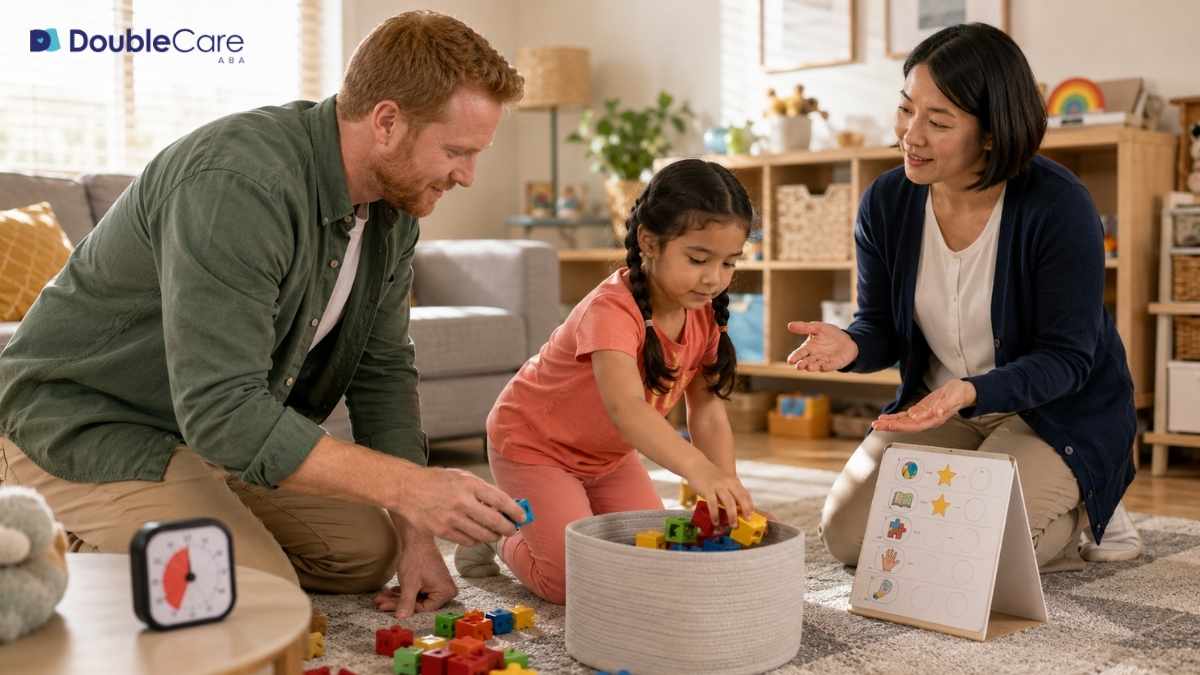
The parent training ABA home therapy benefits usually show up first during routines that happen every single day. Small, repetitive routines make progress easier to see because your child gets regular practice with the same expectation.
According to the World Health Organization, using daily activities like play and home care helps build communication and reduce challenging behaviors.
Progress may show through:
- Fewer transition struggles.
- More functional communication skills.
- Better tolerance for waiting.
- More independent self-care steps.
- Shorter recovery after frustration.
- Clearer parent responses during challenging behavior.
What Good Parent Training Looks Like in an In-Home ABA Plan
High-quality caregiver training follows a structured format, not just a conversation about behavior theories. It should include direct modeling from the clinician, hands-on practice, constructive feedback, and a clear written plan. Your training must target your child's specific goals while respecting your regular family routines.
The program needs to account for work schedules, sibling needs, language preferences, and state-specific funding or regional insurance rules across regions like New Jersey and Pennsylvania.
Understanding your parent role in in-home ABA therapy helps you set realistic boundaries. A good plan fits into your life instead of forcing you to alter your entire household structure. If a strategy requires you to ignore a safety issue while cooking dinner, it is not practical. The training should adjust to your environment so you can support your child's growth.

How Parent Training Supports In-Home ABA Progress Without Replacing the Therapist
Caregiver participation is a supportive tool. A Board Certified Behavior Analyst (BCBA) designs the treatment plan, while Registered Behavior Technicians (RBTs) work directly with your child. Your job is to carry the strategy into natural routines.
The Behavior Analyst Certification Board clarifies that family training supports the carryover of skills but must never replace professionally directed treatment. This distinction highlights how parent training supports in-home ABA progress without placing the clinical burden on your shoulders. You are a partner, not the primary provider.
Need help choosing the first home routine to practice? At DoubleCare ABA, we can look at your child’s current goals and help your family use one small strategy during home ABA sessions. Our team works with parents, so carryover feels practical, not like extra homework.
How to Tell if Parent Training Is Helping Progress Continue at Home
How do you know if your efforts are paying off? You do not need to keep complex data charts. The BCBA handles formal clinical data reviews during supervision visits. Your job is to track simple patterns and share what changes occur outside session hours.
Seeing real-world improvements demonstrates how parent training supports in-home ABA progress over time. Parent training at home speeds up in-home ABA progress when the same skill gets short, repeated practice between sessions. By communicating daily observations, you help the clinical team know when to advance a goal.
Parents can report:
- What routine was practiced during the day.
- How often the child used the skill independently.
- What helped the child respond correctly.
- What triggered behavioral resistance.
- What worked with one caregiver but not another.
- Whether the strategy still fits the home routine.
FAQs About How Parent Training Supports In-Home ABA Progress
Do I need to sit in for every in-home Applied Behavior Analysis (ABA) session?
No. Most parents do not need to watch every minute. You should know active goals, observe short examples, and practice when asked to join. The BCBA can help set a schedule that fits your routine.
What should I practice between ABA sessions?
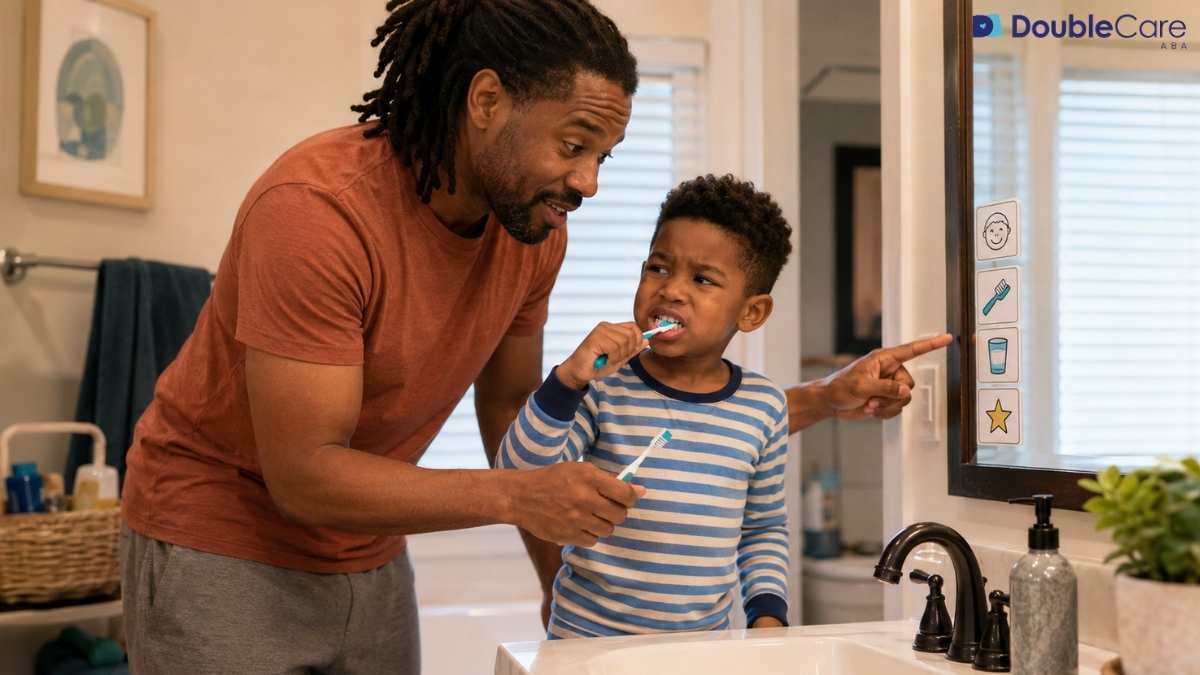
Practice one skill inside one routine your child already does each day. Good options include asking for help, waiting, cleaning up, brushing teeth, sitting for meals, or moving from play to bedtime. Keep the step small enough to repeat.
Can parent training help if my child acts differently with me than with the therapist?
Yes. That difference is one reason parent training is useful. The BCBA can help you use the same prompts, responses, and reinforcement plan, then adjust for how your child responds with you.
Plan the Next Home Practice Step
Home routines give your child extra chances to practice the skills taught during ABA sessions, so parent training works best when the plan stays small, clear, and tied to one routine per week. Progress becomes easier to support when parents know what to practice, what to watch for, and when to ask the BCBA for a change.
At DoubleCare ABA, we provide in-home ABA support and parent training for families in New York, New Jersey, Florida, Pennsylvania, Georgia, Virginia, Maryland, and North Carolina. Call us now or email intake@doublecareaba.com to request a consultation. Our intake team can review your child’s needs, check service availability, and explain what the first home visit may include.