Key Points:
- Whether in-home ABA therapy is right for your family depends on your child’s daily goals, home comfort, family role, and schedule.
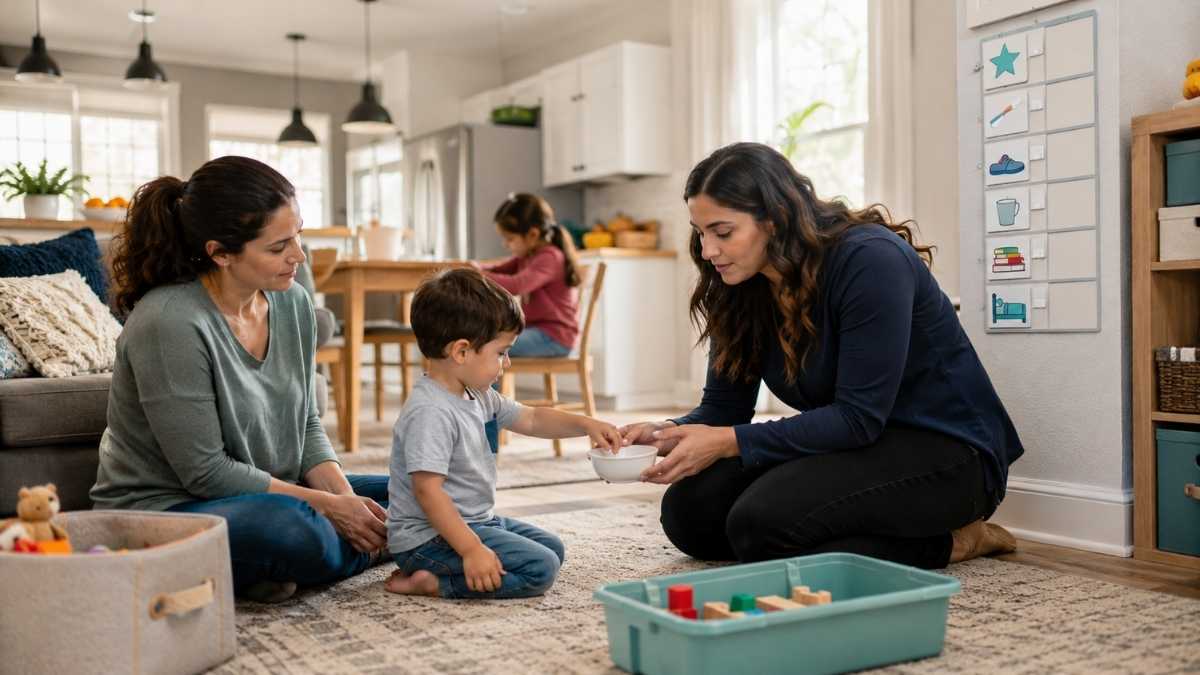
- Home sessions fit best when skills appear during routines like meals, play, transitions, toileting, or sibling interaction.
- Progress requires clear data, BCBA oversight, and enough rest.
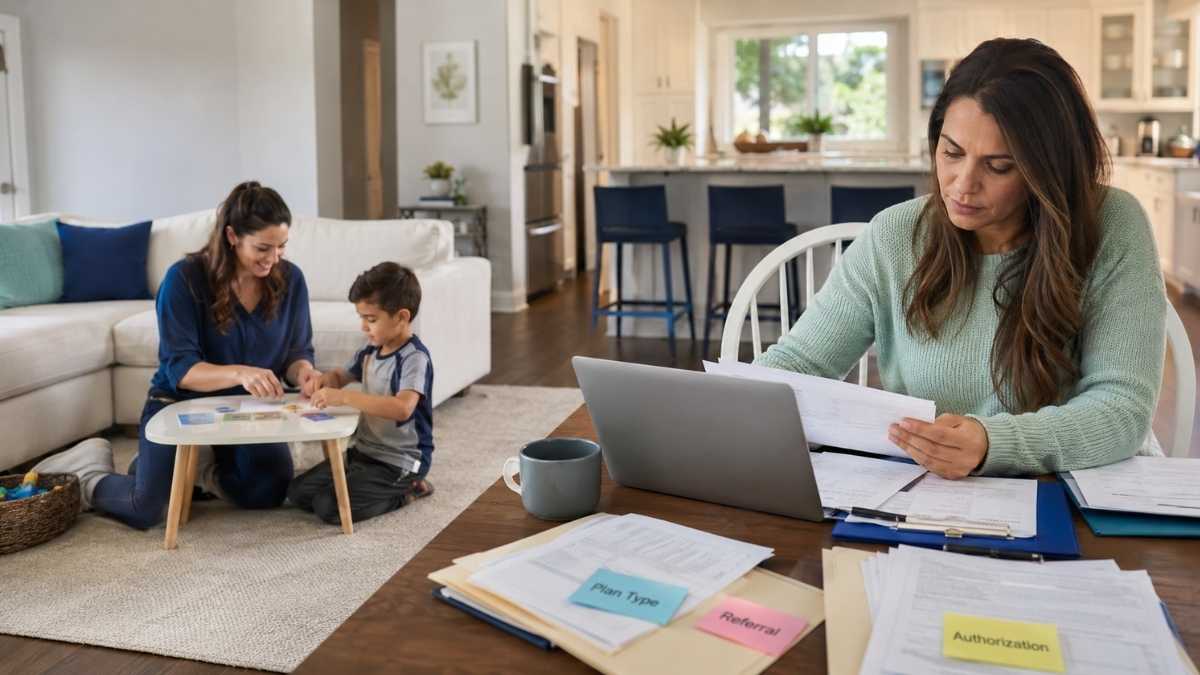
If you are asking, "Is in-home ABA therapy right for my family?" the answer depends on several factors. It depends heavily on where your child learns best, your daily goals, and your home routine.
Home-based ABA therapy services often work well when challenges happen during daily life. This includes communication, meals, play, transitions, toileting, or sibling interaction. It may not be the right fit if your home environment feels chaotic or if sessions exhaust your child. Some children need more peer practice than a home can offer. Checking six specific signs can help you decide.

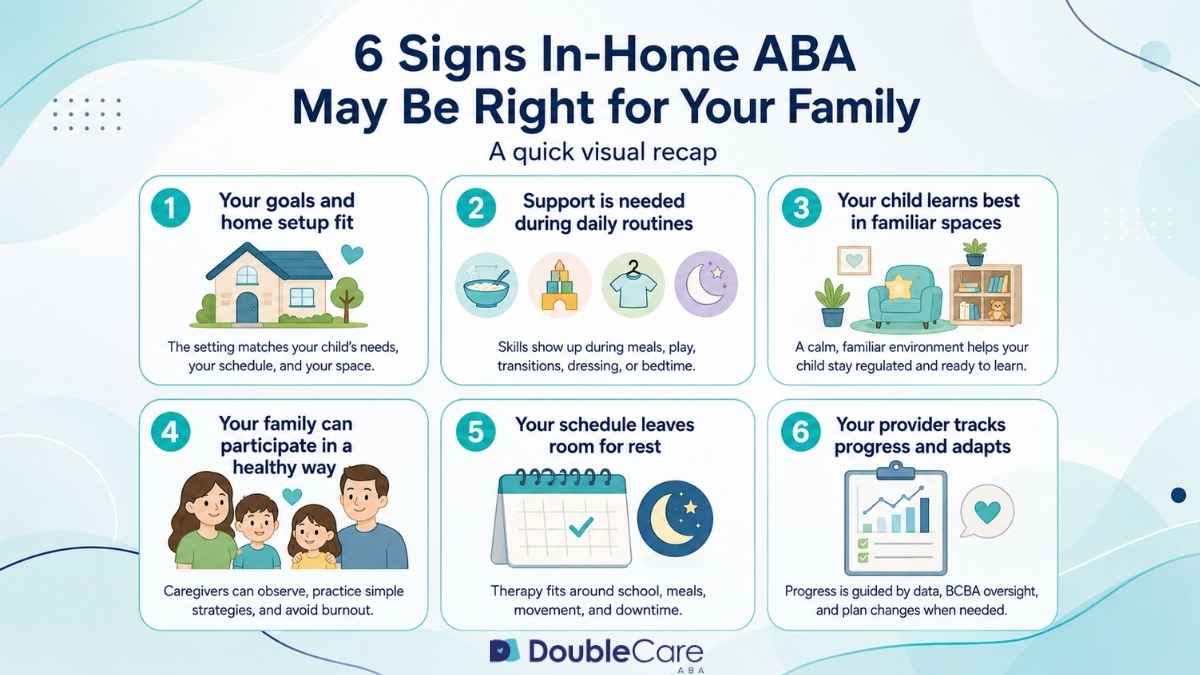
1. Your Main Question Is, “Is In-Home ABA Therapy Right for My Family?”
Home-based care is not a superior choice for every child. The setting you choose needs to match your child's specific goals, learning style, your schedule, and your physical living space. Every child on the spectrum develops differently, so their plan needs to reflect that. Effective programs rely on personalized goals and constant data tracking instead of copied routines.
Autism-focused treatment can happen at home, school, or directly out in the community to build everyday skills. For instance, learning how to handle transitions at a local grocery store helps expand their abilities in real-world settings.
2. Your Child’s Goals Happen During Daily Routines
Therapy sessions at home are most effective when the skills your child needs to build are directly tied to your daily schedule. If you are trying to figure out who is in-home ABA therapy best for, look closely at when your child struggles.
This setup is best for a child whose primary goals pop up during everyday activities rather than during structured table work. Teaching a child to ask for a snack during breakfast carries a massive amount of practical value. It teaches them a real-world skill in the exact moment they need it.
Consider if your child needs support with these common home routines:
- Asking for help during meals.
- Waiting patiently during transitions.
- Playing cooperatively with siblings.
- Following bedtime or morning steps.
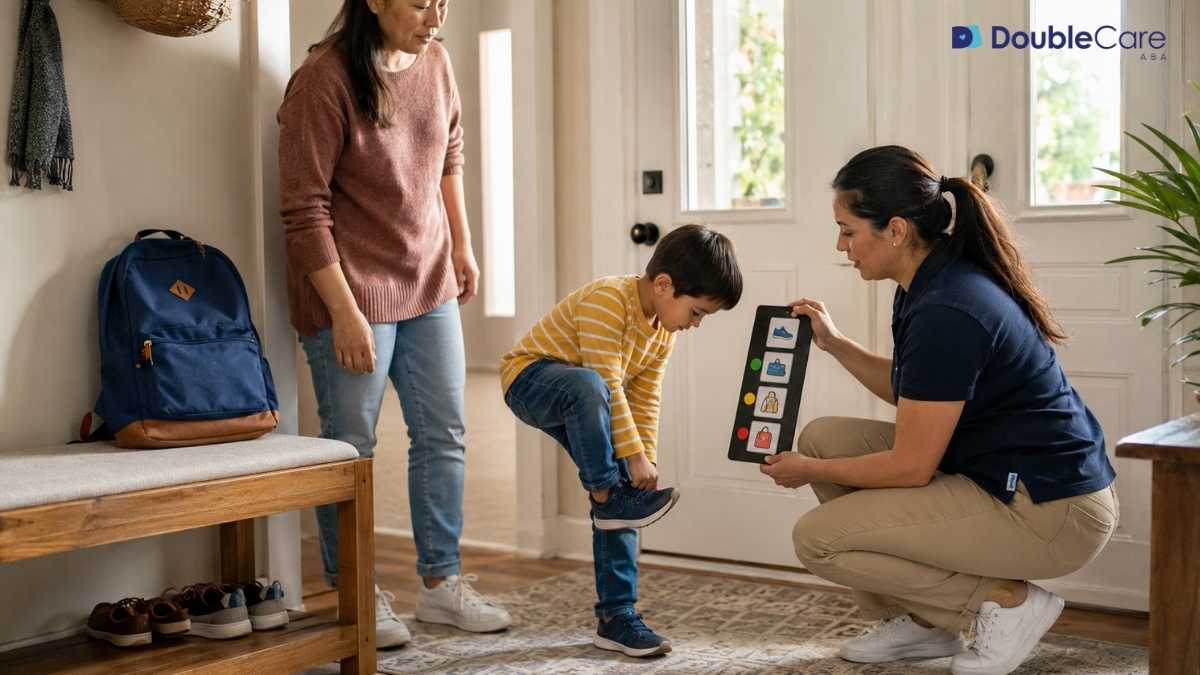
- Practicing independent dressing, cleaning up, or toileting.
- Using communication devices for real needs.
Targeting these areas during actual routines leads to meaningful progress.

3. Your Child Learns Better in Familiar Places
Many parents notice that their children pick up skills faster when they feel completely secure. Data suggest that in-home ABA therapy is a good fit for families when the home environment keeps the child calm and sufficiently regulated to take in new information. Practicing in familiar rooms with their own toys reduces the intense stress of moving from place to place.
So what does that look like at home? It does not mean a home environment automatically works for everyone. In fact, parents often raise an important concern in support communities. Some children view their house as their ultimate sanctuary, and they experience high stress when professionals enter that space. If home sessions lead to intense distress that lasts for weeks, the approach requires a serious look.
At DoubleCare ABA, we review your child's routines, goals, schedule, and home setup before we discuss care options. Our team can help families across New Jersey service areas compare home-based support with their child's daily needs.
4. Your Family Can Participate Without Turning Home Into Therapy All Day
Welcoming a professional into your living space changes your household dynamic. Crucial in-home ABA therapy considerations for families include caregiver availability, personal privacy, and sibling activity levels. You also need to consider physical space and downtime. Parent participation should center on coaching, everyday practice, and simple carryover strategies instead of turning a parent into a full-time therapist.
Check these points before making a commitment:
- Can a parent observe part of the sessions?
- Can the family practice simple strategies between visits?
- Can your house host sessions without disrupting every family member?
- Can siblings join when social goals require it?
5. Your Child’s Schedule Leaves Room for Learning and Rest
Any parent asking, "Should I choose in-home ABA therapy?" needs to assess their child's energy levels after school, at meals, with homework, and during sensory breaks. While home care cuts out driving back and forth, it still adds structured, focused tasks to your child's afternoon.
A healthy schedule leaves room for essential needs:
- Regular meals and nutritional breaks.
- Unstructured relaxation time.
- Physical movement and outdoor play.
- Casual time with siblings.
- School homework assignments.
- Predictable sleep routines.
Parents in online forums note that packing school and intensive therapy into one day causes extreme fatigue. If your child finishes school completely drained, discuss adjusting start times or shortening sessions within a personalized ABA therapy plan.
6. Your Provider Can Measure Progress and Change the Plan
When seeking autism services, in-home ABA therapy can be the right choice for autism support only if your provider tracks progress objectively. They must adapt the intervention plan when the data highlights a clear need. Behavioral therapy requires defined objectives, daily data collection, and regular oversight by a Board Certified Behavior Analyst (BCBA).
Parents comparing in-home therapy options should ask providers about home goals, data-tracking methods, BCBA review frequency, and parent-training structure. A home environment does not make a program effective on its own. The actual plan, objective data, therapist rapport, and family dynamic do the real work.
Quick gut-check: Is in-home ABA therapy right for my family?
- Likely yes: Goals happen during home routines, and your child can focus well in the house.
- Likely no: Home sessions cause continuous emotional distress or take away vital rest time.
- Ask first: Check the weekly schedule, clarify your parental role, and verify the frequency of BCBA supervision.
FAQs About Is In-Home ABA Therapy Right for My Family
Is home ABA therapy good for my child if they get upset when people visit?
Yes, it can still work well. The initial phase of the plan must focus strictly on building rapport, establishing comfort, and keeping demands low. If the distress continues after the team adjusts its approach, the BCBA should evaluate if a clinic setting fits better.
Can siblings be part of in-home ABA sessions?
Siblings can join when the specific goal involves sharing, turn-taking, play, or conversational skills. They should not participate in every session. The therapist will outline exactly when sibling interaction helps and when your child needs focused, one-on-one attention.
What should I prepare before the first home ABA session?
Set up a clear area with a small table, chairs, favorite toys, and room to move. Keep your household routines visible. The therapist needs to observe how your child communicates, handles transitions, and plays naturally in their everyday environment.
Compare Your Home Routine With a Clinical Plan
Choosing a therapy setting gets much easier when you map your child's goals directly against your daily routines. A solid home-based plan supports communication, daily living skills, and behavior goals without taking over your household.
At DoubleCare ABA, we provide in-home ABA therapy across our listed service areas, including New York, New Jersey, Florida, Georgia, Pennsylvania, Maryland, Virginia, and North Carolina. Reach out to us or email intake@doublecareaba.com to schedule a free 15-minute consultation.